
What you get
Stop the concrete dust and get the lower level back
Bare basement concrete makes dust and wicks moisture — that’s the musty smell. Sealing the slab shuts both down.
We moisture test before we quote. High readings get a vapor-tolerant system, and you see the numbers before the price.
- Moisture-tested before we quote, so the system actually matches the slab
- Seamless surface — nowhere for dirt, dust or mildew to collect
- Light-colored coatings bounce what little natural light a basement gets
- Vapor-tolerant systems available where the slab readings call for one
- Ideal under home gyms, workshops, laundry rooms and finished rec space
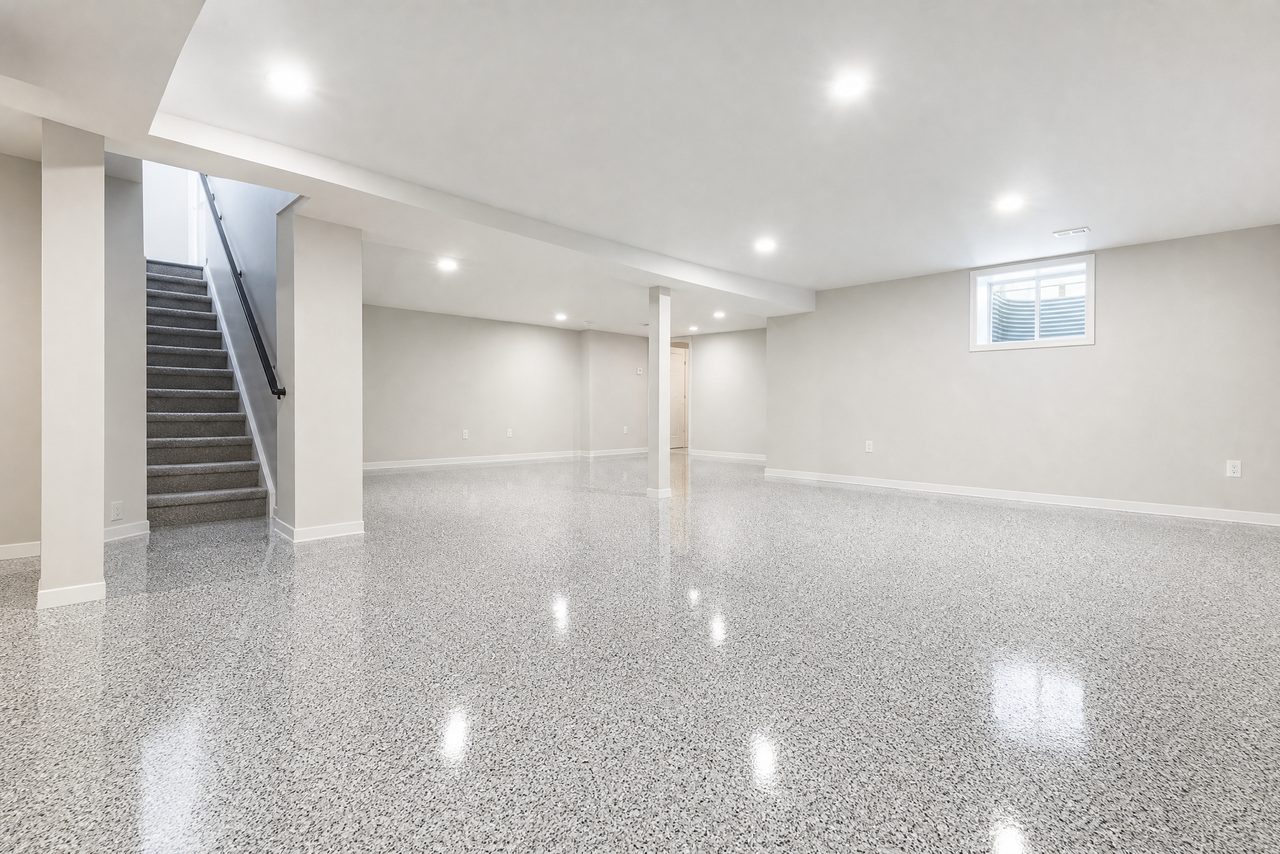
Before & after
What prep and a proper system do
Drag the divider. Left is the kind of slab we start with, right is the finish.
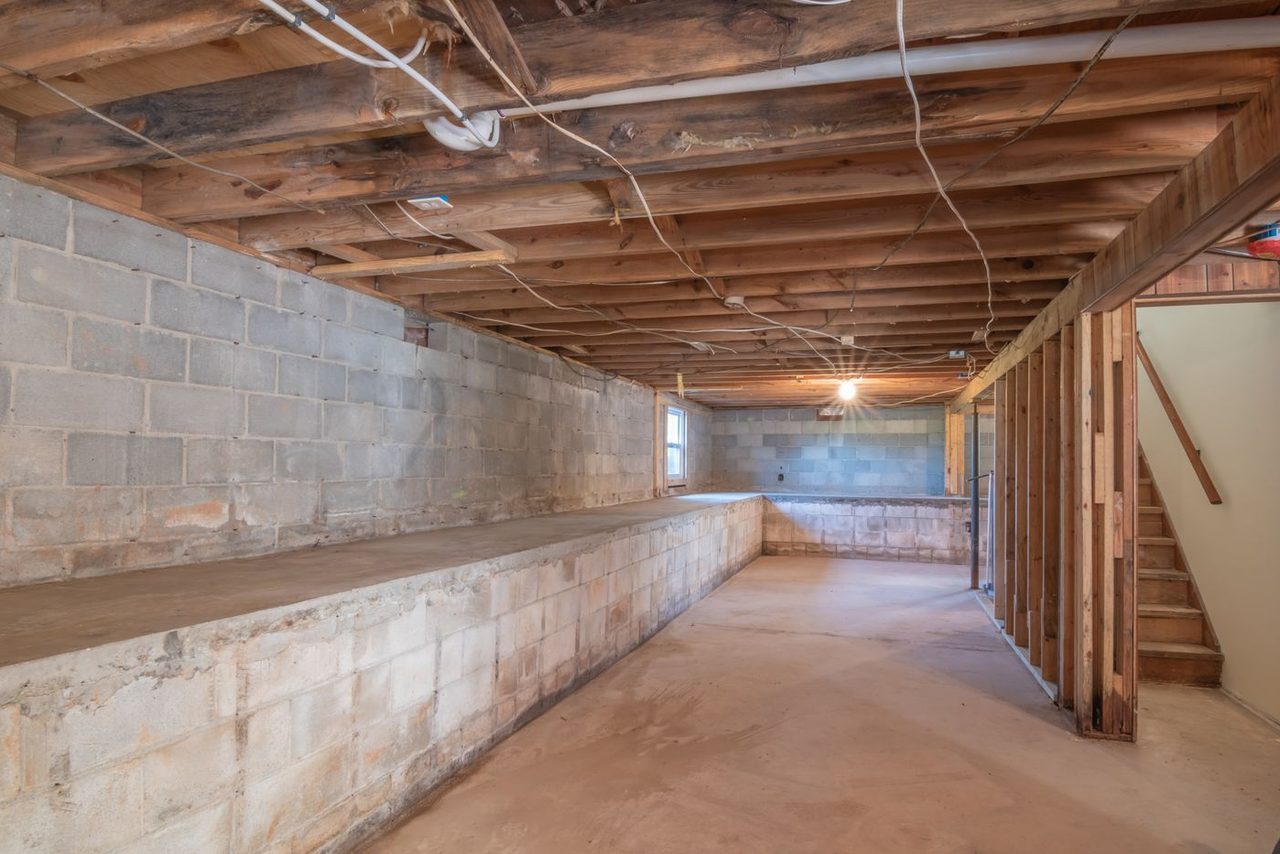 Before
After
Before
After
Questions about basement floor epoxy?
(217) 417-5950One call and we can usually tell you what your slab needs and roughly what it costs.
Prefer to type it out? Send the quote form instead or email info@dpflooringservices.com.
Straight talk
Why a basement slab is not a garage slab
The difference is water you cannot see: ground moisture rises through a below-grade slab as vapor, and under a standard coating it blisters the floor off within a year.
So we test rather than guess. Low readings: a standard system at garage prices. High readings: a vapor-tolerant build that actually survives.
How the install runs
Four steps, no surprises
You will know the schedule, the price and the cure dates before we start grinding.
Quote and moisture test
We measure and moisture test before quoting — the reading changes which system you need, and what it costs.
Clear, grind and repair
Diamond grinding with vacuum shrouds. Cracks filled, joints treated, pits leveled.
Prime and base coat
Mitigating primer where readings call for it, then base coat and flake. Light colors are the usual pick.
Topcoat, cove base and cure
Clear urethane seals it; optional cove base up the wall. Foot traffic next day, furniture after 2–3.
What it costs
Pricing for basement floor epoxy
Priced by the square foot, quoted only after we see the floor. What moves it:
- Square footage of the finished area
- Moisture readings — a slab with vapor drive needs a different, costlier system
- How much crack, joint and patch work the slab needs first
- Finish choice and whether you want cove base up the walls
Where we do it
Basement Floor Epoxy near you
Available across our 50+ mile service area. Town not listed? Call anyway.
- Epoxy Flooring in Champaign, IL
- Epoxy Flooring in Urbana, IL
- Epoxy Flooring in Savoy, IL
- Epoxy Flooring in Mahomet, IL
- Epoxy Flooring in Rantoul, IL
- Epoxy Flooring in Bloomington, IL
- Epoxy Flooring in Normal, IL
- Epoxy Flooring in Decatur, IL
- Epoxy Flooring in Danville, IL
- Epoxy Flooring in Monticello, IL
- Epoxy Flooring in Tuscola, IL
- Epoxy Flooring in Paxton, IL
- Epoxy Flooring in Clinton, IL
- Epoxy Flooring in Tolono, IL
Questions
Basement Floor Epoxy FAQs
My basement floods occasionally. Can it still be coated?
Fix the water first — a coating survives getting wet but won’t stop water coming in. Once drainage is handled, a sealed slab cleans up faster than bare concrete.
Will it stop the musty smell?
Usually — much of that smell is slab moisture feeding mildew, and sealing cuts it off. If it’s from walls or a crawl space, the floor alone won’t fix it, and we’ll say so.
Can you coat around a finished basement?
The floor has to be completely clear, and we can’t coat under built-ins. Planning a build-out? Coat the slab first, then frame — easier and cheaper.
Ready to quote basement floor epoxy?
Free, itemized, on-site quotes anywhere in the service area — and no trip charge to come look.