
What you get
The step that decides how long your epoxy floor lasts
Almost every failed epoxy floor failed the same way: nobody prepped the concrete.
We diamond grind or shot blast — never acid etch — then fill cracks structurally, patch spalling, degrease oil and strip failed coatings. This day decides whether your floor lasts fifteen years or fifteen months.
- Diamond grinding and shot blasting with vacuum dust control
- Crack chasing and structural filling, not a skim coat over the top
- Spall, pit and edge repair with re-leveling where the slab needs it
- Removal of failed coatings — old paint, sealers and peeling epoxy
- Degreasing and testing so oil-contaminated concrete will take a bond
- Included in every epoxy floor we install — never quoted as an optional extra
Before & after
What prep and a proper system do
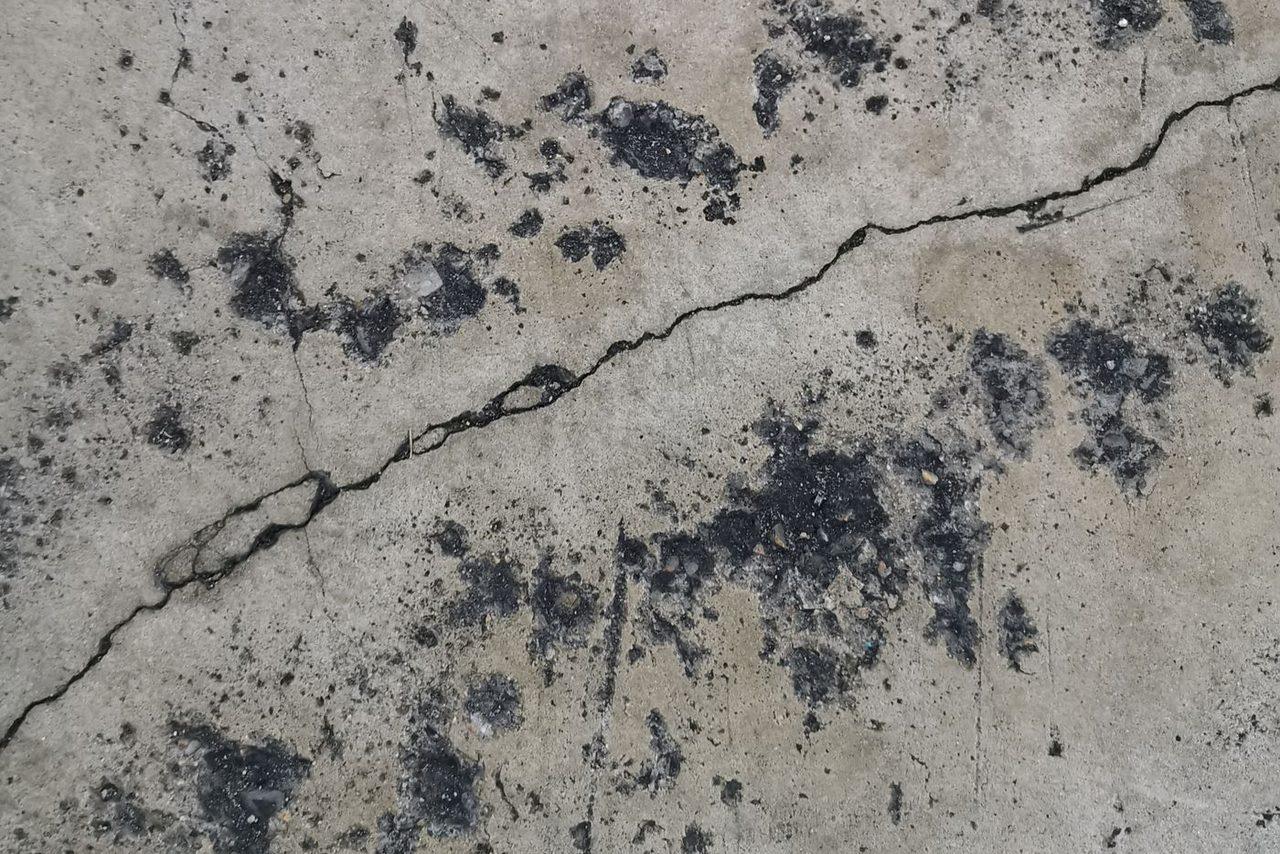
Drag the divider. Left is the kind of slab we start with, right is the finish.
 Before
After
Before
After
Questions about epoxy floor prep & repair?
(217) 417-5950One call and we can usually tell you what your slab needs and roughly what it costs.
Prefer to type it out? Send the quote form instead or email info@dpflooringservices.com.
Straight talk
Why nearly every failed epoxy floor failed here
- Acid etching instead of grinding — barely opens the surface and leaves salt residue.
- Coating over oil contamination — warm weather pulls it back up through the new coating.
- Skimming cracks — they telegraph back through inside a season.
- Coating a wet slab — no moisture test, blisters by summer.
All four are prep failures. None are the epoxy's fault.
How the install runs
Four steps, no surprises
You will know the schedule, the price and the cure dates before we start grinding.
Assess and test
We identify what is on the slab and moisture test. On a failed floor we find out why — the cause is still there.
Strip and decontaminate
Failed coatings come off entirely; oil-soaked areas get degreased and re-tested.
Profile the concrete
Diamond grinding with vacuum shrouds, shot blasting where needed — so the epoxy keys in mechanically.
Repair, then coat
Cracks chased and filled structurally, spalls patched, joints treated. Only then does the system go down.
What it costs
Pricing for epoxy floor prep & repair
Priced by the square foot, quoted only after we see the floor. What moves it:
- Prep method — a diamond grind versus shot blasting a contaminated slab
- Linear feet of cracking and joints that need chasing and filling
- Square footage of spalling, pitting or delaminated surface to patch
- Whether a failed coating has to come off before anything else happens
Where we do it
Epoxy Floor Prep & Repair near you
Available across our 50+ mile service area. Town not listed? Call anyway.
- Epoxy Flooring in Champaign, IL
- Epoxy Flooring in Urbana, IL
- Epoxy Flooring in Savoy, IL
- Epoxy Flooring in Mahomet, IL
- Epoxy Flooring in Rantoul, IL
- Epoxy Flooring in Bloomington, IL
- Epoxy Flooring in Normal, IL
- Epoxy Flooring in Decatur, IL
- Epoxy Flooring in Danville, IL
- Epoxy Flooring in Monticello, IL
- Epoxy Flooring in Tuscola, IL
- Epoxy Flooring in Paxton, IL
- Epoxy Flooring in Clinton, IL
- Epoxy Flooring in Tolono, IL
Questions
Epoxy Floor Prep & Repair FAQs
My epoxy floor is peeling. Can you fix it or does it all come off?
A small failure on a well-bonded floor can be cut back and blended in. Widespread failure or bad original prep means it all comes off. We’ll tell you which you have, straight.
Is a DIY kit ever worth it?
Only on a brand-new, bone-dry, heated slab — and even then just for a few years. Kits are thin, rely on acid etching, and include nothing for repair. Stripping a failed DIY floor costs more than doing it properly would have.
How dusty is the grinding?
Far less than you would expect — vacuum shrouds with HEPA extraction capture most of it, and we clean the rest before we leave.
Ready to quote epoxy floor prep & repair?
Free, itemized, on-site quotes anywhere in the service area — and no trip charge to come look.