
What you get
A garage floor that shrugs off hot tires and road salt
A proper epoxy system seals the slab completely: spills wipe up and the floor mops clean.
Hot-tire pickup is what kills DIY kits — warm rubber peels them up in sheets. We diamond grind, repair, and install a system rated for hot tires. Most garages: two days on site, parking after about a week.
- Diamond-ground surface prep, so the coating bonds instead of peeling in a year
- Hot-tire resistant — no lifting or delamination where the car parks
- Solid color, partial flake or full-broadcast flake, in a blend you pick
- Crack, pit and apron-spall repair included before anything is coated
- Most two- and three-car garages are a one- to two-day install
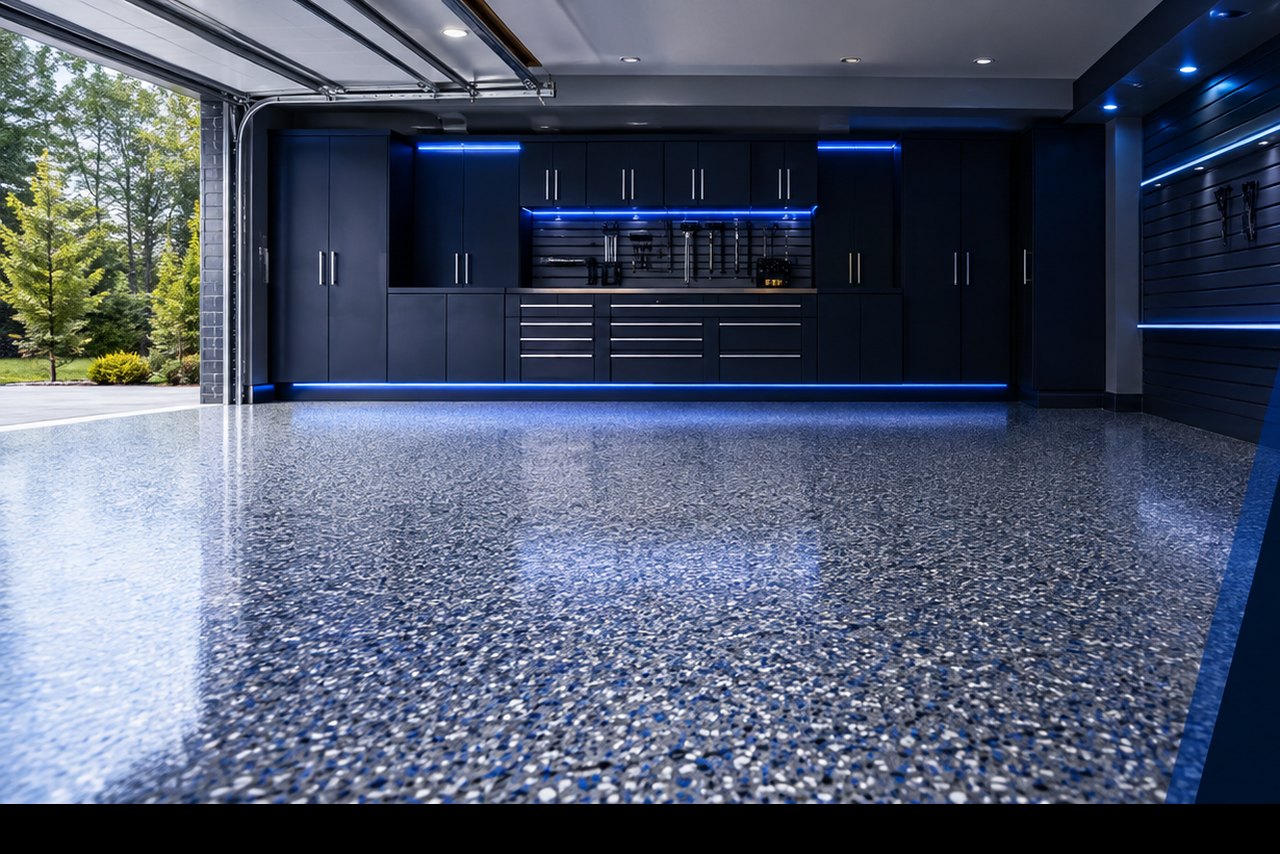
Before & after
What prep and a proper system do
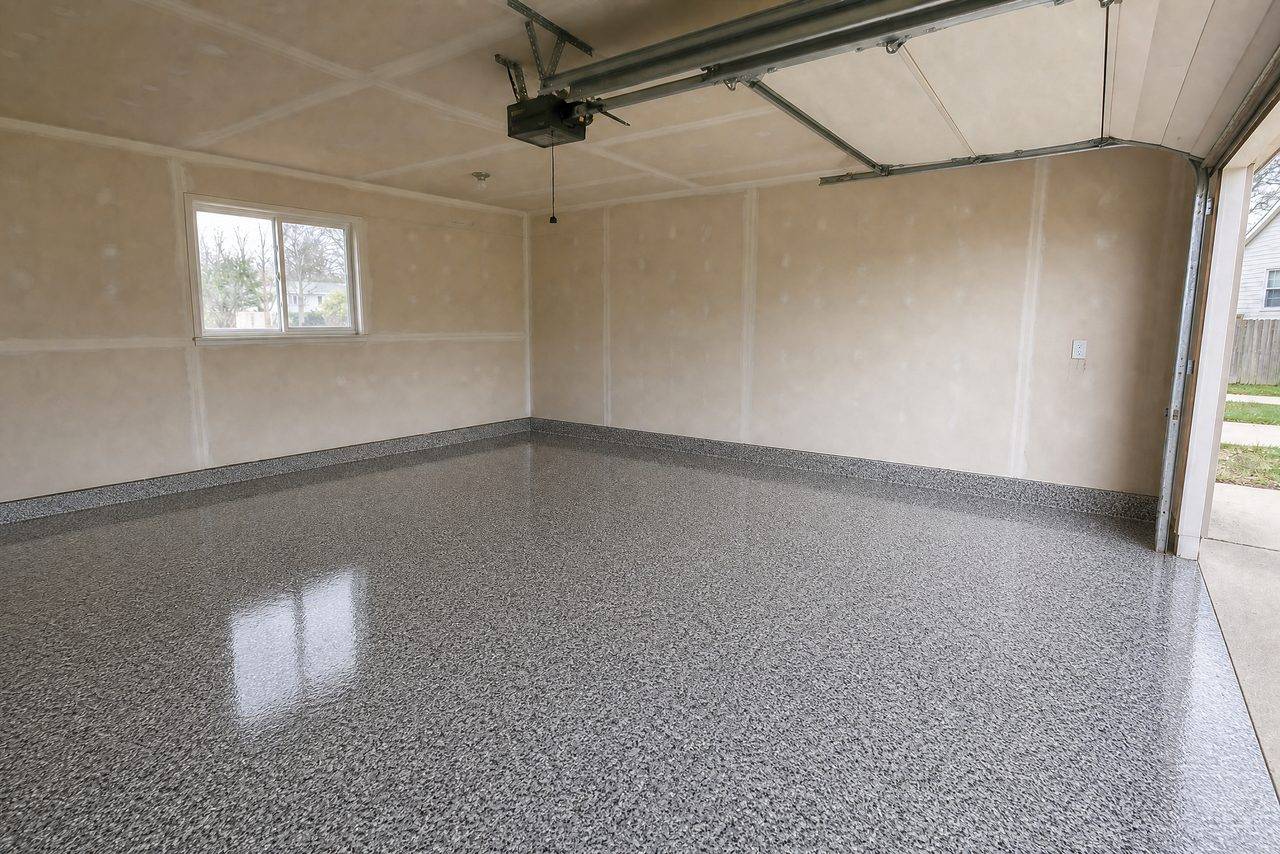
Drag the divider. Left is the kind of slab we start with, right is the finish.
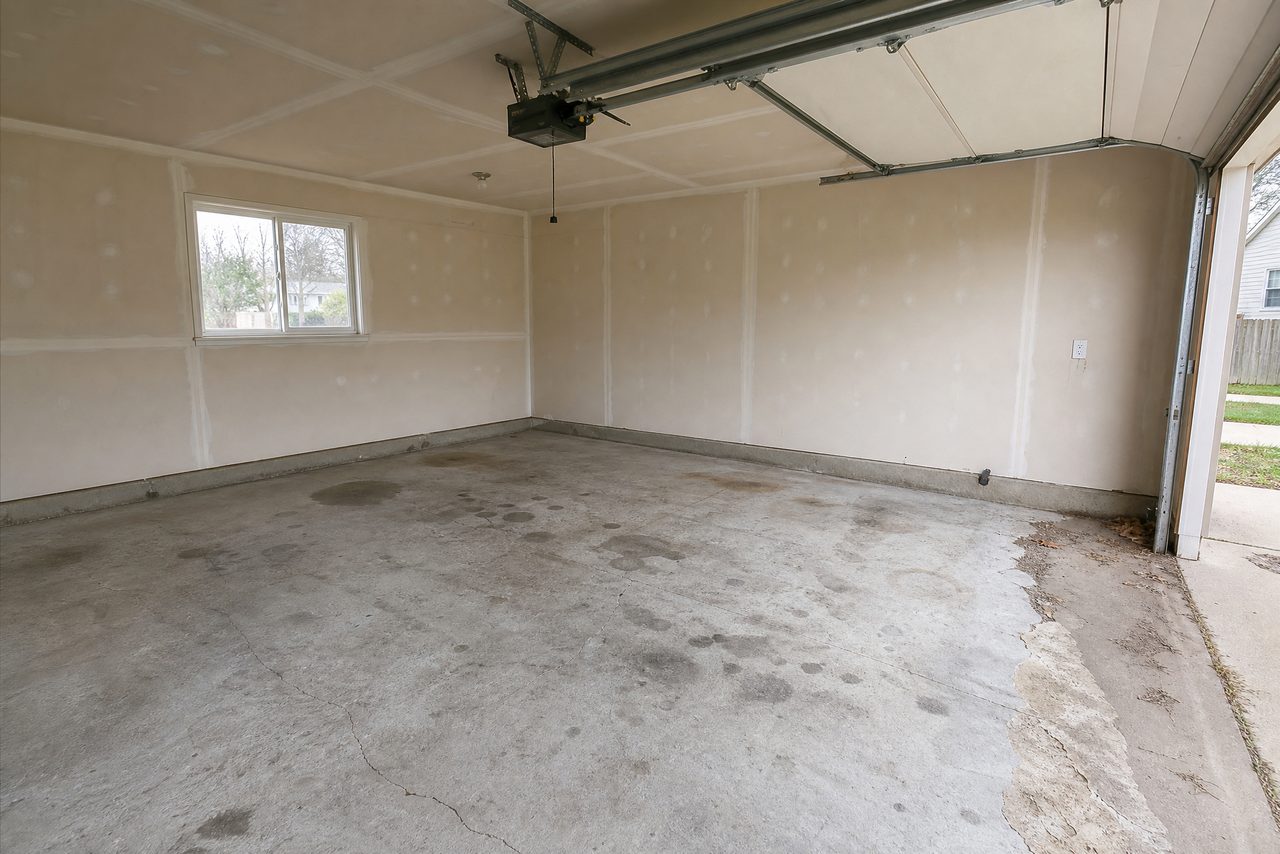
 Before
After
Before
After
Questions about garage floor epoxy?
(217) 417-5950One call and we can usually tell you what your slab needs and roughly what it costs.
Prefer to type it out? Send the quote form instead or email info@dpflooringservices.com.
Straight talk
Why epoxy beats paint, tiles and roll-out mats
- Paint lifts under hot tires inside a season. Epoxy is thicker and bonded into ground concrete.
- Tiles and mats let water and salt sit against the slab — that causes spalling.
- Sealers are thin and need redoing every few years. Epoxy repairs the slab, then covers it seamlessly.
How the install runs
Four steps, no surprises
You will know the schedule, the price and the cure dates before we start grinding.
Free on-site quote
We measure, check the slab, bring real samples. Itemized number before we leave; no trip charge.
Grind and repair
Diamond grind with vacuum shrouds, fill cracks, patch pits, rebuild the apron. This day decides the floor's lifespan.
Base coat and flake
Pigmented base down, chips broadcast to refusal, then scraped flat and vacuumed.
Clear topcoat and cure
Urethane clear seals it. Walk next morning, shelving in 2–3 days, park after about a week.
What it costs
Pricing for garage floor epoxy
Priced by the square foot, quoted only after we see the floor. What moves it:
- Square footage — a two-car garage and a four-car outbuilding price very differently per foot
- Slab condition — cracking, pitting and spalling at the apron all add repair time
- Finish — solid color, partial flake or full-broadcast flake
- Extras — non-slip aggregate, cove base at the walls, and a second clear coat
Where we do it
Garage Floor Epoxy near you
Available across our 50+ mile service area. Town not listed? Call anyway.
- Epoxy Flooring in Champaign, IL
- Epoxy Flooring in Urbana, IL
- Epoxy Flooring in Savoy, IL
- Epoxy Flooring in Mahomet, IL
- Epoxy Flooring in Rantoul, IL
- Epoxy Flooring in Bloomington, IL
- Epoxy Flooring in Normal, IL
- Epoxy Flooring in Decatur, IL
- Epoxy Flooring in Danville, IL
- Epoxy Flooring in Monticello, IL
- Epoxy Flooring in Tuscola, IL
- Epoxy Flooring in Paxton, IL
- Epoxy Flooring in Clinton, IL
- Epoxy Flooring in Tolono, IL
Questions
Garage Floor Epoxy FAQs
How long will my garage be out of action?
About a week. Walk on it next morning, shelving in 2–3 days, drive after roughly 7 — exact dates in writing before we start.
Do you coat the apron and the area under the door?
Yes, up to the inside edge of the door seal. The outdoor apron takes UV and freeze-thaw, so an interior system stops there. The strip inside the door gets rebuilt during prep.
Can you match a color to the house or my cabinets?
Within reason, yes. Flake blends mix from stock chip colors and we bring sample boards to the estimate. Want something exact? Ask — we’ll be straight about whether we can hit it.
Ready to quote garage floor epoxy?
Free, itemized, on-site quotes anywhere in the service area — and no trip charge to come look.