
What you get
Specified for the traffic your floor actually takes
We spec thickness, resin and topcoat from what actually happens on your floor, then phase the install so you are never shut down completely.
Prep and scheduling are what make a commercial floor last: degrease, shot blast, joints filled to take wheel loads — in sections, overnight and weekends, so your operation keeps moving.
- High-build and chemical-resistant systems for real production environments
- Shop, warehouse and pole barn floors — single bay through full distribution floor
- Safety line striping, aisle marking, walkways and hazard zones
- Shot blasting and degreasing for oil-contaminated slabs
- Phased, overnight and weekend installs so the operation keeps running
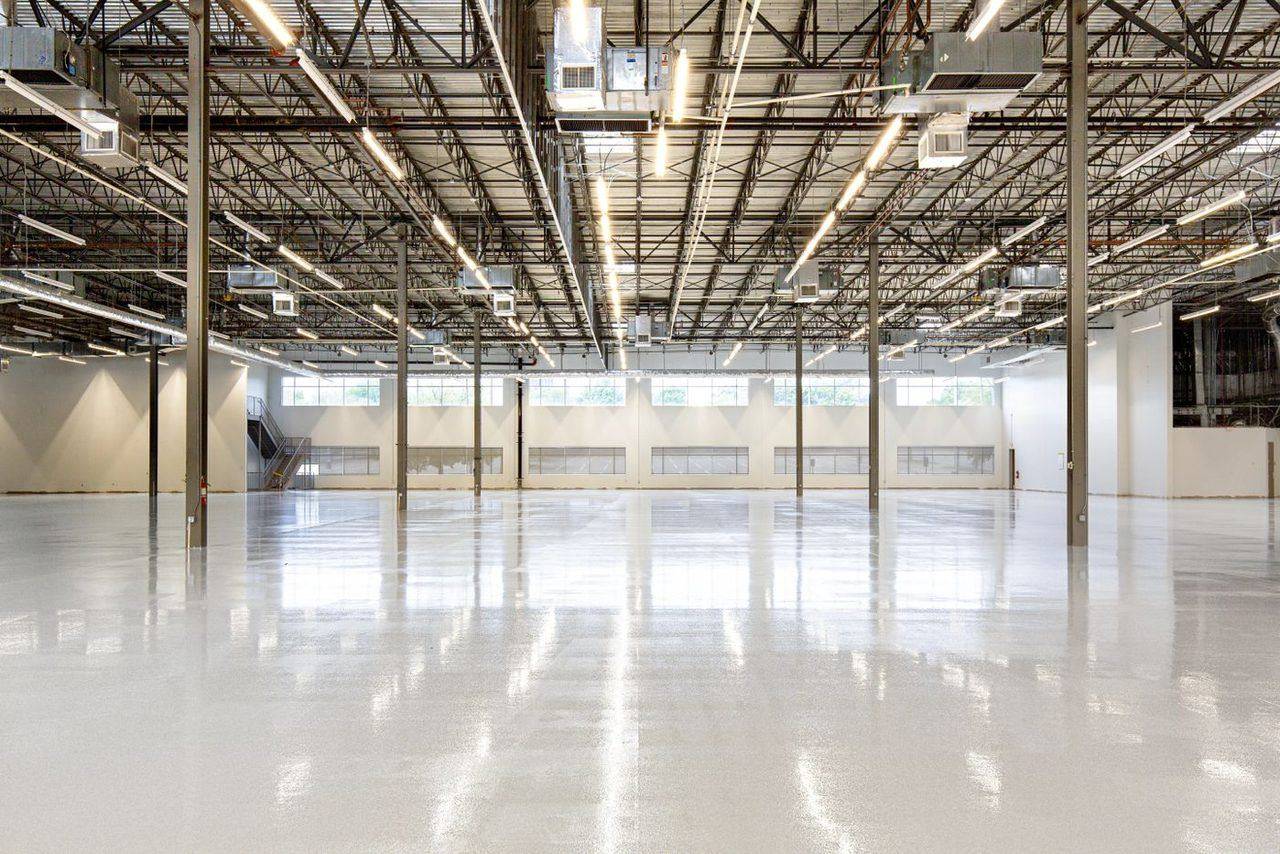
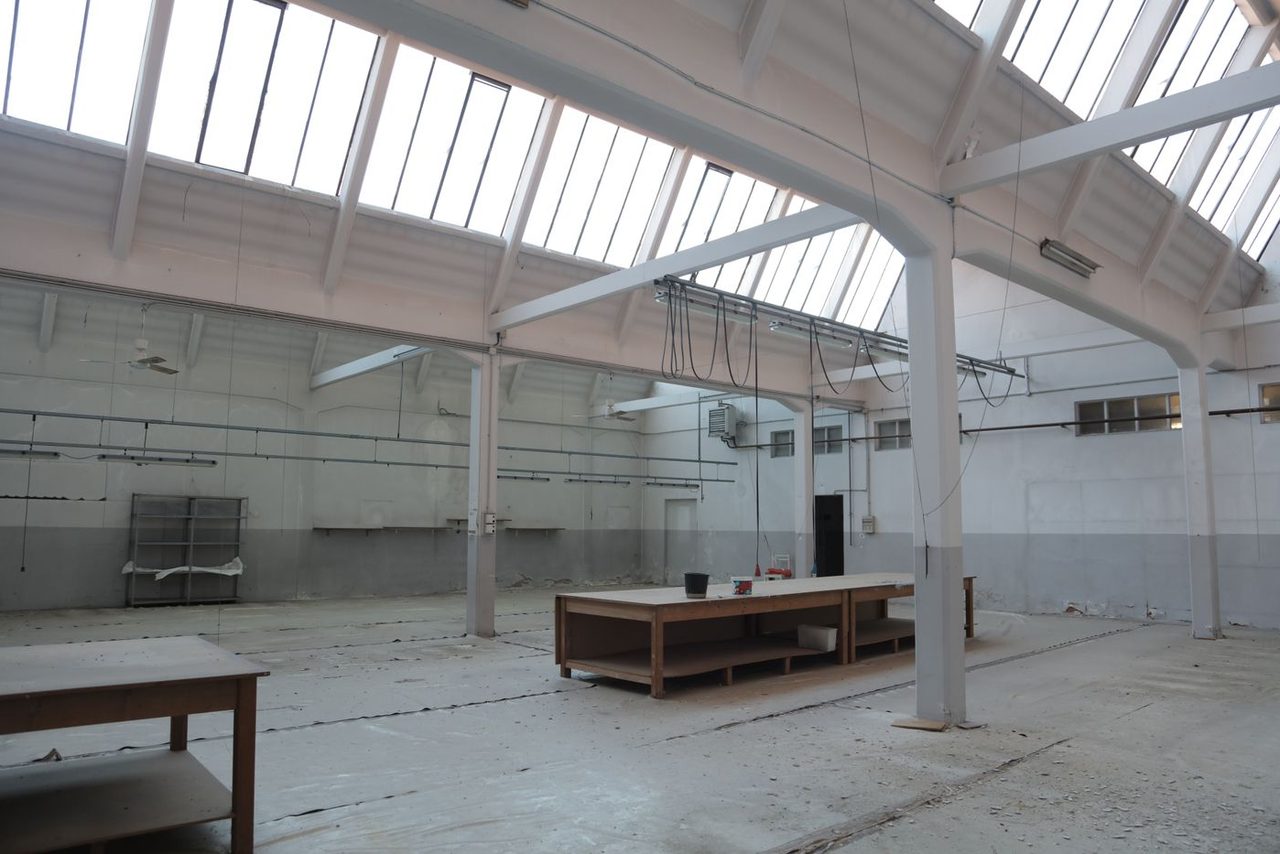
Before & after
What prep and a proper system do
Drag the divider. Left is the kind of slab we start with, right is the finish.
 Before
After
Before
After
Questions about commercial & industrial floor coating?
(217) 417-5950One call and we can usually tell you what your slab needs and roughly what it costs.
Prefer to type it out? Send the quote form instead or email info@dpflooringservices.com.
Straight talk
What actually destroys a commercial epoxy floor
- Point loading. Forklifts crush coating edges. We spec build thickness from your equipment and fill joints with semi-rigid filler.
- Thermal shock. Hot wash-downs kill standard epoxy; a urethane mortar survives. Tell us if you wash down — it changes the spec.
- Old contamination. Oil-soaked slabs need degreasing and shot blasting, not just a grind.
How the install runs
Four steps, no surprises
You will know the schedule, the price and the cure dates before we start grinding.
Walkthrough and spec
We walk the floor, ask what drives and spills on it, then spec and quote around that — phasing plan included.
Phasing and scheduling
The floor gets sectioned so a route stays open. Overnight and weekend work where needed.
Degrease, blast and repair
Contamination degreased, profile shot blasted in, joints rebuilt to carry wheel loads.
Build coats, striping and topcoat
System down to spec thickness. Striping sealed into the floor, non-slip aggregate where it gets wet.
What it costs
Pricing for commercial & industrial floor coating
Priced by the square foot, quoted only after we see the floor. What moves it:
- Total square footage and how many phases the install has to run in
- Build thickness and chemical resistance the operation requires
- Prep method — grinding versus shot blasting on a heavily contaminated slab
- Line striping, aisle marking, non-slip aggregate and out-of-hours scheduling
Where we do it
Commercial & Industrial Floor Coating near you
Available across our 50+ mile service area. Town not listed? Call anyway.
- Epoxy Flooring in Champaign, IL
- Epoxy Flooring in Urbana, IL
- Epoxy Flooring in Savoy, IL
- Epoxy Flooring in Mahomet, IL
- Epoxy Flooring in Rantoul, IL
- Epoxy Flooring in Bloomington, IL
- Epoxy Flooring in Normal, IL
- Epoxy Flooring in Decatur, IL
- Epoxy Flooring in Danville, IL
- Epoxy Flooring in Monticello, IL
- Epoxy Flooring in Tuscola, IL
- Epoxy Flooring in Paxton, IL
- Epoxy Flooring in Clinton, IL
- Epoxy Flooring in Tolono, IL
Questions
Commercial & Industrial Floor Coating FAQs
Can you work without shutting us down?
Yes — most of our commercial work runs sectioned, one area at a time, nights and weekends where needed, with a route always open.
How long before forklifts can run on it?
Foot traffic in 24 hours, light wheeled traffic in 2–3 days, full forklift loading after about 7 at full cure — dates in writing.
Do you do line striping and safety marking?
Yes — striping goes between base and topcoat, sealed under the clear so it doesn’t wear off under traffic.
Related
Other services
Ready to quote commercial & industrial floor coating?
Free, itemized, on-site quotes anywhere in the service area — and no trip charge to come look.