
What you get
A floor with depth and movement you cannot get from paint
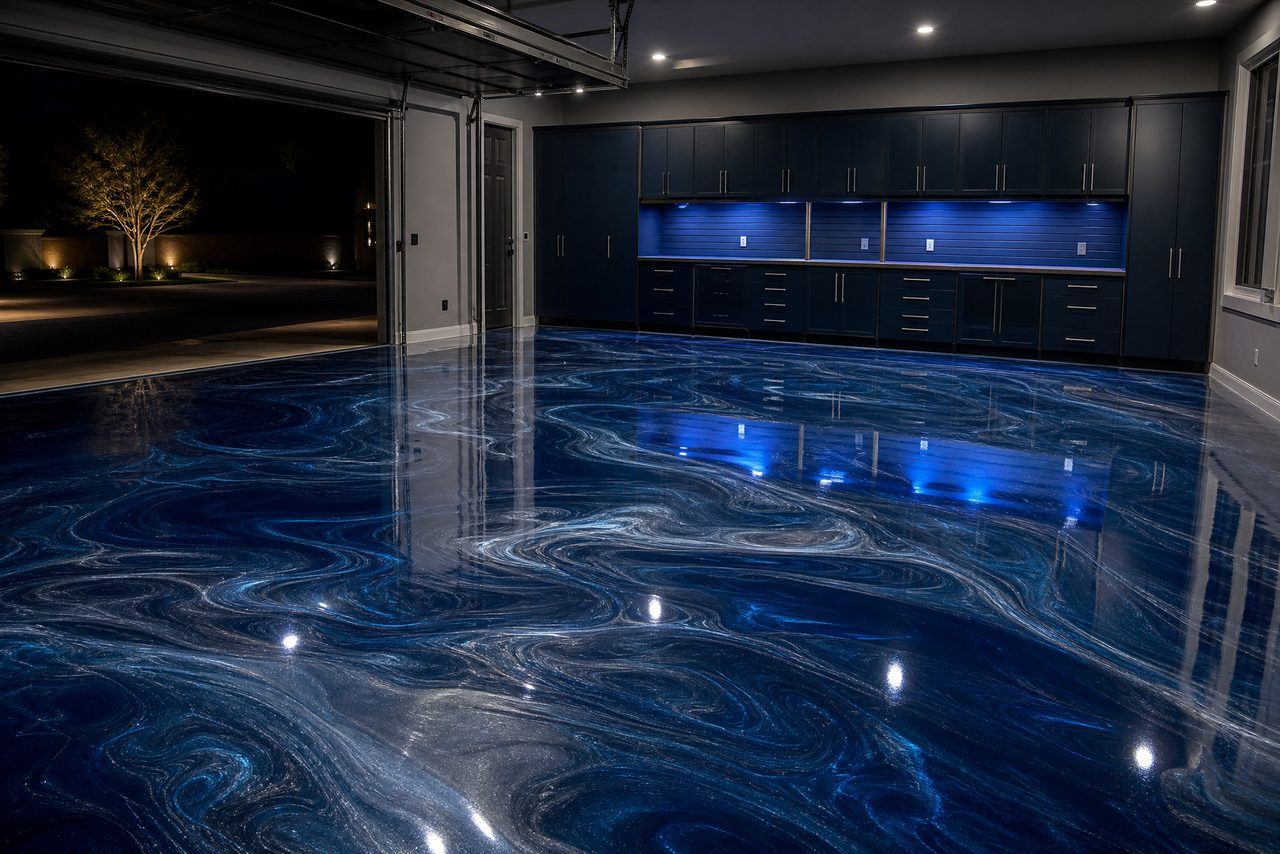
The premium end of what we install: depth and veining like polished stone, and nobody can pour the same floor twice.
A metallic pour is created live — the least forgiving thing we do — so we pour these ourselves. Want a hard-working, forgiving floor instead? Flake is the better buy, and we’ll say so.
- Poured and worked by hand — genuinely one of a kind, every time
- Depth, veining and movement that reads like polished stone
- Blends shown as physical sample panels at the estimate
- Flatter, sounder slab prep than a flake floor of the same size
- Finished with clear urethane for UV stability and scuff resistance
Before & after
What prep and a proper system do
Drag the divider. Left is the kind of slab we start with, right is the finish.
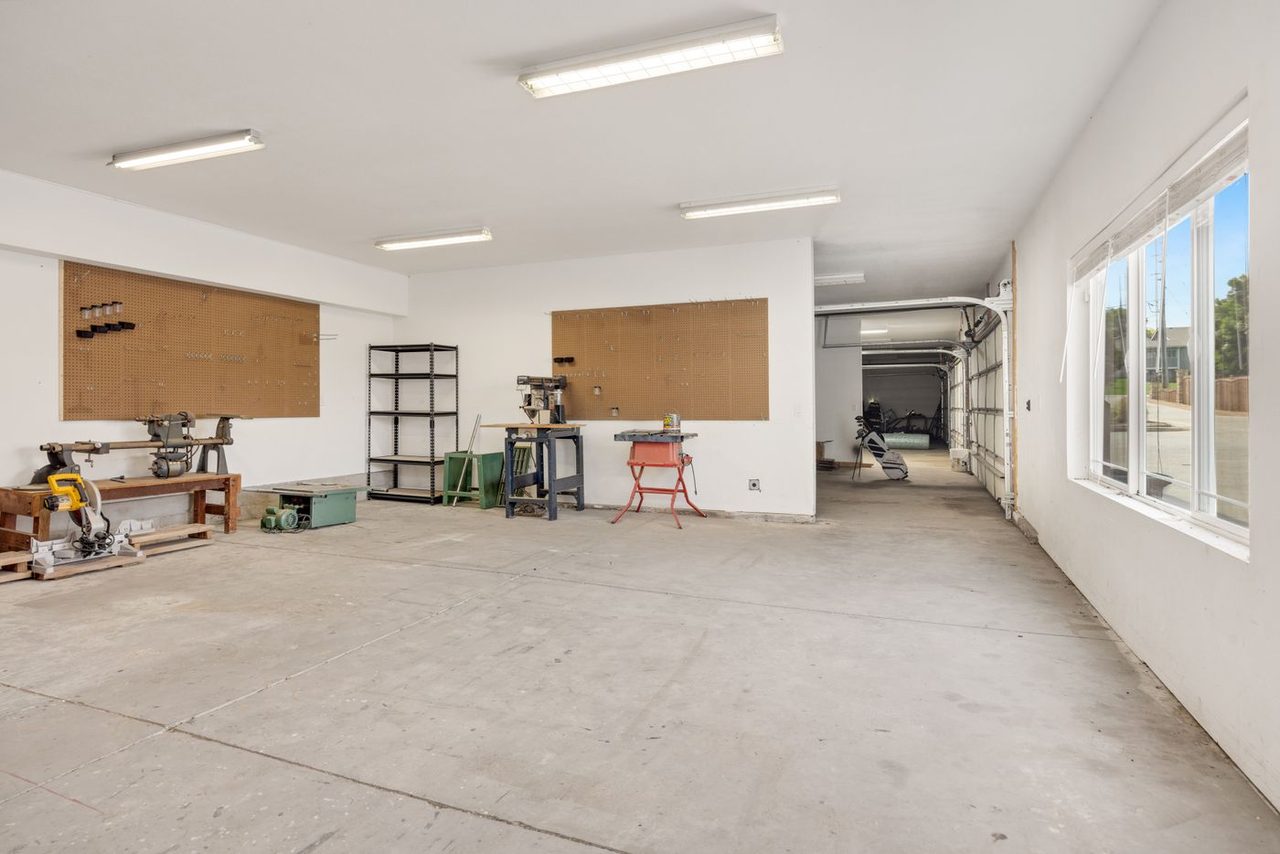
 Before
After
Before
After
Questions about metallic epoxy flooring?
(217) 417-5950One call and we can usually tell you what your slab needs and roughly what it costs.
Prefer to type it out? Send the quote form instead or email info@dpflooringservices.com.
Straight talk
What you are actually buying with a metallic floor
A metallic floor is created live on your slab — pigment moved through self-leveling resin. That travel is what reads as stone.
So nobody can promise a specific pattern, including us. The floor will match the sample blend, not copy it — an installer who says otherwise is being loose with you.
How the install runs
Four steps, no surprises
You will know the schedule, the price and the cure dates before we start grinding.
Sample panels and honest expectations
Physical panels of our blends, plus a plain statement of what cannot be guaranteed.
Extra slab preparation
Self-leveling resin finds every low spot, so metallic takes more grinding and patching than flake.
Base coat
The pigmented base cures first and shows through the metallic layer — part of the design.
The pour
One continuous session, wet edge across the room. Two coats of urethane clear after cure.
What it costs
Pricing for metallic epoxy flooring
Priced by the square foot, quoted only after we see the floor. What moves it:
- Square footage and how many people it takes to keep a wet edge across the room
- Extra slab flatness and repair work a metallic pour demands
- Number of pigment colors and the complexity of the blend
- Clear urethane topcoats over the finished pour
Where we do it
Metallic Epoxy Flooring near you
Available across our 50+ mile service area. Town not listed? Call anyway.
- Epoxy Flooring in Champaign, IL
- Epoxy Flooring in Urbana, IL
- Epoxy Flooring in Savoy, IL
- Epoxy Flooring in Mahomet, IL
- Epoxy Flooring in Rantoul, IL
- Epoxy Flooring in Bloomington, IL
- Epoxy Flooring in Normal, IL
- Epoxy Flooring in Decatur, IL
- Epoxy Flooring in Danville, IL
- Epoxy Flooring in Monticello, IL
- Epoxy Flooring in Tuscola, IL
- Epoxy Flooring in Paxton, IL
- Epoxy Flooring in Clinton, IL
- Epoxy Flooring in Tolono, IL
Questions
Metallic Epoxy Flooring FAQs
Is metallic slippery?
Smooth plus wet is slick — more so than flake. Where rain and snow come in, we broadcast non-slip aggregate into the topcoat.
Can you repair a metallic floor if it gets damaged?
Not invisibly — a patch reads as a patch. Gouges can be filled and scuffed urethane recoated across the whole floor. Put it where it will be looked at, not dropped on.
How much longer does metallic take than flake?
A day or two, mostly prep: extra flattening, a cured base coat, and two urethane coats. Cure dates in writing.
Ready to quote metallic epoxy flooring?
Free, itemized, on-site quotes anywhere in the service area — and no trip charge to come look.